

If Everything Is a Priority, Nothing Is
By Alexander Danicic. UK based. Working worldwide.
Executive thinking for founders who need clarity, ownership, and direction.
Executive authority article
A clear note for founders, leadership teams, and businesses that are trying to move faster without losing direction
Published 18 May 2026. Updated as operational standards evolve.
If everything is treated as urgent, nothing receives the depth it deserves. Teams become busy, leaders become reactive, and the business starts confusing motion with progress.
Most businesses do not slow down because teams lack talent. They slow down because priorities compete. When every request has the same weight, direction disappears and execution becomes fragmented.
For founders, this is rarely obvious at first. The business still feels active. Meetings happen. Messages move. Tasks get assigned. But the deeper signal is different. Important work keeps waiting behind louder work.
The hidden cost of competing priorities
Competing priorities create operational drift. The business does not stop. It simply moves in too many directions at once.
- Teams switch context before meaningful progress is made
- Decisions are reopened instead of completed
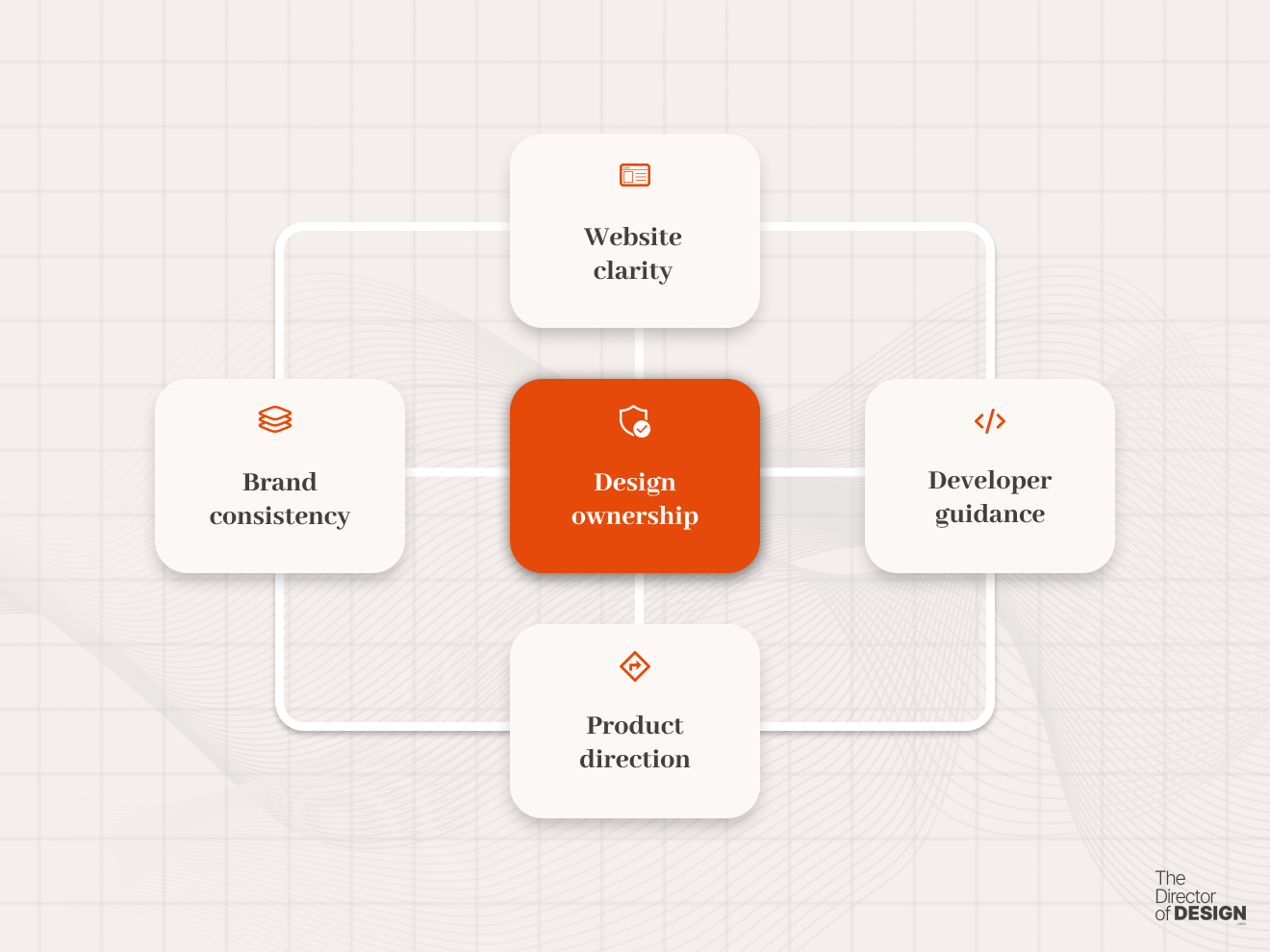
- Brand, website, and product work begin to feel disconnected
- Founders spend more energy reacting than directing
- Good people lose confidence because the standard keeps moving
This is not only a productivity issue. It affects trust, quality, speed, and perception. A business that cannot protect focus will struggle to create a premium experience.
Why founders drown in noise
Founders often carry too many unresolved decisions at once. Website direction, product details, sales material, brand consistency, team feedback, investor pressure, client requests, and daily operations all compete for attention.
The problem is not ambition. Ambition is necessary. The problem appears when ambition has no clear order. Without order, every idea feels important and every delay feels dangerous.
Clear leadership does not say yes to everything. Clear leadership decides what matters now, what waits, and what does not belong at all.
Good ideas still kill momentum
One of the hardest truths in business is that good ideas can still be wrong for the moment. A new page, a new campaign, a new feature, a new visual system, or a new offer may all have value. That does not mean they should all happen now.
When every good idea enters the room at the same time, the business becomes emotionally convincing but operationally weak. The question is not only whether an idea is good. The question is whether it serves the current direction.
Premium businesses do not win because they chase every possibility. They win because they protect the few decisions that matter most.
Reactive businesses lose direction
A reactive business does not always look chaotic from the outside. Sometimes it looks active, enthusiastic, and ambitious. But inside the business, the cost is obvious. Priorities change too often. Teams wait for clarity. Work gets started before decisions are stable.
This is where websites, products, and brands begin to fracture. The website says one thing. The sales conversation says another. The product experience communicates something else. The business starts asking the market to trust a direction that it has not fully clarified internally.
High value clients notice this. They may not describe it as design inconsistency, but they feel the hesitation. They sense when a business is not fully aligned.
Teams mirror leadership clarity
Teams rarely outperform the clarity they receive. If leadership is unclear, execution becomes unclear. If priorities keep shifting, delivery becomes defensive. If ownership is vague, decisions return to the founder again and again.
This is why decision ownership matters. Someone has to hold the direction. Someone has to protect the standard. Someone has to decide what is important enough to move now and what should wait.
Strong design leadership is not only about aesthetics. It is about protecting clarity across decisions, priorities, and execution.
The illusion of speed
Many businesses mistake urgency for pace. Urgency creates pressure. Pace creates progress. They are not the same.
A business can move quickly and still waste time if the direction is wrong. A founder can approve more work and still create more rework. A team can produce more output and still move the company further from the right standard.
Real speed comes from fewer open questions. When the business knows what matters, decisions become cleaner and execution becomes calmer.
Premium businesses protect focus
Premium is not only how something looks. Premium is how clearly it is directed. A premium business knows what it stands for, who it serves, what it refuses, and what standard it protects.
That clarity shows up everywhere. It shows up in the website. It shows up in the product. It shows up in the language, the offer, the handoff, the sales conversation, and the small decisions that clients quietly judge.
High net worth clients and serious buyers rarely need more noise. They need confidence. Clear priorities create that confidence because they remove doubt from the experience.
What to do before spending more
Before a business spends more on design, websites, brand work, or product improvements, it should understand where the friction actually sits. More execution does not fix unclear direction.
That is the purpose of a Business Design Audit. It identifies the priority problems across website, product, brand, and decision ownership before the business commits to bigger spend.
For some businesses, the next step is a redesign. For others, it is a clearer offer, stronger messaging, better standards, a simplified product experience, or a sharper decision process. The audit exists to find the truth before money is wasted.
Final thought
If everything is a priority, nothing is protected long enough to become excellent.
Clear priorities create trust. Clear ownership creates momentum. Clear direction creates stronger businesses.
Related pages